
Sep 16, 2026Buying Guides
How to Calculate Landed Cost for Bathroom Accessories Imported from China (2026)
How to calculate landed cost for Bathroom Accessories Imported from China
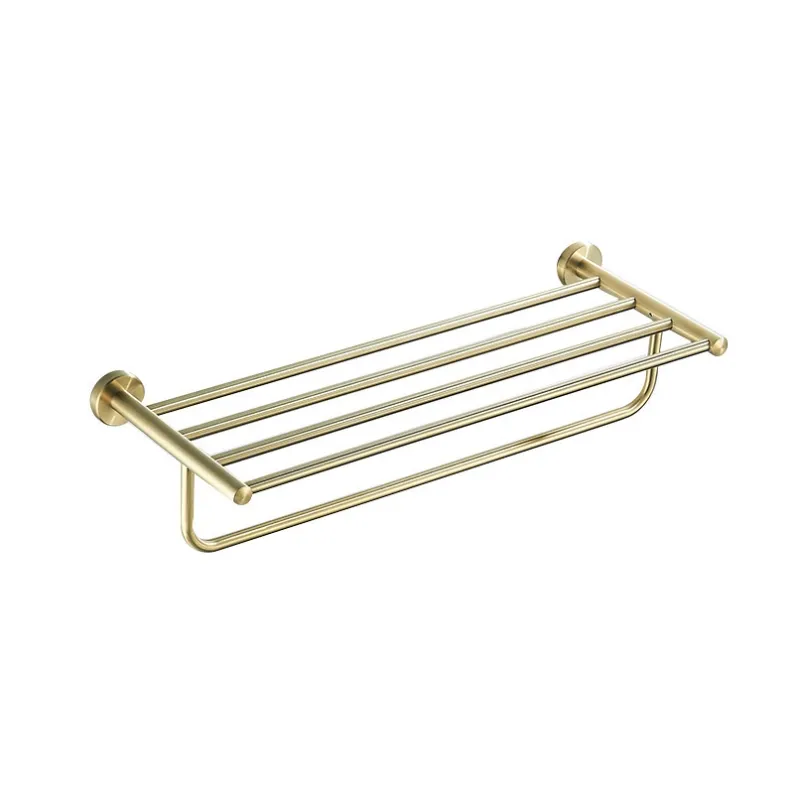
Quick answer: Landed cost = product cost + China-origin costs + international freight + insurance + customs duty and any additional China tariffs + broker and port fees + inland freight. Divide the total by sellable units to get landed cost per unit. The step that swings the result the most is not the freight rate — it is the HTS classification, because that decides whether you pay 0% or a Section 301 rate on top of a duty-free base.
Most importers get the freight number roughly right and the classification number completely wrong. This guide walks through both, with a worked example for stainless steel bathroom accessories.
The landed cost formula
Landed Cost = Product Cost
+ China-Origin Costs (packaging, inland freight, export docs)
+ International Freight
+ Insurance
+ Customs Duties & Additional China Tariffs
+ Customs / Broker Fees
+ US Port & Terminal Handling
+ Inland Freight (drayage + trucking to warehouse)
Landed Cost per Unit = Total Shipment Landed Cost ÷ Number of Sellable Units
Landed cost is not the supplier's FOB price. A 12FOBtowelbarcaneasilylandat12FOBtowelbarcaneasilylandat18+.
What belongs in landed cost — and what does not
What belongs in landed cost — and what does not
Cost item | Example (1,000 units) | Include? |
|---|---|---|
Product purchase price | $12,000 | ✅ |
Factory packaging / custom boxes | $500 | ✅ |
China inland trucking to port | $600 | ✅ |
Export documentation | $100 | ✅ |
Ocean freight | $2,000 | ✅ |
Cargo insurance | $100 | ✅ |
US customs duty and additional China tariffs | varies — see below | ✅ |
Customs broker fee | $250 | ✅ |
Port / terminal charges | $350 | ✅ |
Drayage | $400 | ✅ |
Trucking to your warehouse | $700 | ✅ |
Pre-shipment inspection | $300 | Usually ✅ |
Warehousing after arrival | $500 | Usually not (operating cost) |
Marketing | $1,000 | ❌ |
Sales commission | $500 | ❌ |
Two different numbers hide inside this table: the customs value (what CBP assesses duty on) and your management landed cost (what you use for margin). Keep them in separate tabs — see Customs value ≠ landed cost.
The classification decision that sets your duty rate
This is the part importers skip, and it is where the money is.
Wall-mounted base-metal bathroom accessories — towel bars, towel rings, robe hooks, toilet paper holders, grab bars — are classified under HTSUS 8302.50.0000, "hat-racks, hat-pegs, brackets and similar fixtures, and parts thereof, of base metal." The general rate of duty on that subheading is Free.
That classification is not automatic. For years CBP argued the opposite: that wall-mounted bathroom accessories are "sanitary ware" and should be classified by their constituent material — 7324.90.00 for steel (duty free) or 7907.00.10 for zinc (3% duty). In Moen Inc. v. United States (CIT Court No. 15-00145, March 7, 2018), the Court of International Trade rejected that position for toilet paper holders, applying ejusdem generis to hold that "similar fixtures" covers any rack that is (1) made of base metal, (2) affixed to a wall, and (3) used to hang, hold or support items. CBP's own ruling database contains many rulings reaching the same result for towel bars, towel rings, robe hooks and holders.
Why this matters for your landed cost: the base rate is Free either way for steel. The real exposure is the additional Section 301 duty on China-origin goods, which is assessed on top of the base rate and depends on the specific subheading and tariff list. A base rate of 0% does not mean a duty of 0%.
Also note the trap in the opposite direction: bathroom accessories are not one SKU. A shipment containing towel bars, soap dishes, shower caddies, shelves and showerheads can span several subheadings with different treatment. Classify each SKU — do not apply one rate to the whole container.
Want a sanity check on your classification? CBP's CROSS rulings database is free and searchable, and it is where the answers actually live — for example ruling N344474, N358312 and N357530.
Does 304 vs 201 stainless steel change the classification?
No. Both are base metal, so both sit under 8302.50.0000. The material grade changes your durability and rust risk, not your duty rate — which is a good reason to spec the material deliberately. SUS 304 (18/8) is the grade that survives a humid bathroom long-term; a magnet is not a reliable grade test, because cold working such as bending and stamping can make genuine 304 slightly magnetic. Wonder manufactures this category in SUS 304 — towel bars, shower shelves, paper holders and robe hooks — so the grade decision, not the classification, is where the product-side quality/cost trade-off actually sits.
Worked example: 1,000 SUS 304 towel bars from Guangdong
Illustrative figures only — substitute your own quotes. The example uses a 1,000-piece SUS 304 towel bar order, the category Wonder manufactures for OEM and ODM buyers.
Line | Amount |
|---|---|
Product cost — 1,000 × $12.00 | $12,000 |
China inland freight | $600 |
Export documentation | $100 |
Ocean freight (LCL, 8 CBM) | $2,000 |
Marine insurance | $100 |
Base HTS duty (8302.50.0000) | $0 |
Additional China tariff — see sensitivity table | 0–0–3,000 |
Customs broker | $250 |
US port / terminal charges | $350 |
Drayage | $400 |
Trucking to warehouse | $700 |
Duty sensitivity — why you cannot use a generic "China tariff = X%"
The additional China tariff is applied to the customs value, so the same shipment lands at very different numbers depending on the rate that actually applies to your subheading:
Additional tariff rate | Additional duty on $12,000 customs value | Total landed cost | Landed cost / unit |
|---|---|---|---|
0% | $0 | $16,500 | $16.50 |
7.5% | $900 | $17,400 | $17.40 |
25% | $3,000 | $19,500 | $19.50 |
That is a 18% swing in landed cost per unit on identical goods, driven entirely by classification and current tariff action. Always take the rate from the current official source, never from a blog post or an old spreadsheet — the HTS and the additional-duty lists are revised throughout the year. The USITC publishes the current additional-duty reference for China-origin products, and its HTS search tool is advisory: it explicitly warns that search results may need to be checked against the relevant provisions or confirmed with a CBP ruling.
FOB vs CIF vs DDP: the Incoterm changes the math
Incoterm | Sample quote | What you still add |
|---|---|---|
FOB Shanghai | $12.00/unit | Ocean freight, insurance, duty, broker, port, drayage, inland trucking |
CIF New York | $14.00/unit | Duty/tariffs, broker, port, drayage, inland trucking — do not add freight and insurance again |
DDP your warehouse | $18.00/unit | Nothing on paper — but you are paying these costs inside the price, and you must know exactly who is paying duty and how it is declared |
The most common error is double-counting freight on a CIF quote, and the most dangerous one is accepting DDP without knowing how the supplier is handling the additional China tariff — that is a customs exposure, not just a cost.
Allocating freight across mixed SKUs
Shared costs (ocean freight, broker, port charges, drayage) must be allocated. Do not divide freight equally by unit — a bulky shower caddy and a compact robe hook do not consume the same container space.
For bathroom accessories, allocate ocean freight by CBM (volume). It is usually more representative than gross weight because the cargo is bulky and light. Keep the allocation basis consistent and document it.
SKU | Qty | Unit cost | Product total | Freight | Duty @15% | Fees | Inland | Total landed | Landed/unit |
|---|---|---|---|---|---|---|---|---|---|
Towel bar (SUS 304) | 1,000 | $12.00 | $12,000 | $2,000 | $1,800 | $600 | $1,300 | $17,700 | $17.70 |
Robe hook | 2,000 | $4.00 | $8,000 | $1,000 | $1,200 | $500 | $800 | $11,500 | $5.75 |
Paper holder | 1,000 | $6.00 | $6,000 | $800 | $900 | $400 | $600 | $8,700 | $8.70 |
These figures are a separate illustration from the sensitivity table above: the duty column here assumes an illustrative 15% additional tariff so the allocation method is easy to follow. Substitute the rate that actually applies to your subheading.
Customs value ≠ landed cost
Do not assume customs value is simply product + freight. CBP's valuation rules determine what is included, and certain international transportation and insurance costs are treated differently from the price actually paid or payable.
Keep two separate calculations:
- A. Customs calculation: customs value × applicable tariff rate(s) = duty
- B. Business landed-cost calculation: product + freight + duties + fees + transportation + other costs = landed cost
Mixing them creates declaration risk on one side and margin surprises on the other.
Costs importers most often forget
China side: factory pickup · export documentation · origin handling · export clearance · container consolidation / LCL fees · loading charges Freight side: fuel and security surcharges · marine insurance · LCL/CFS charges · demurrage and detention if incurred US side: merchandise processing fee · ISF filing · terminal handling · port fees · container freight station charges · exam/inspection charges Product economics (track separately): quality inspection · product testing and certification · labeling · packaging changes · damaged or defective units · samples · financing and currency conversion costs
FAQ
Is landed cost the same as FOB price? No. FOB covers the goods and delivery to the port of loading. Landed cost includes freight, insurance, duty, additional China tariffs, broker and port fees, drayage and inland trucking.
What HTS code do stainless steel towel bars use? Wall-mounted base-metal towel bars are generally classified under HTSUS 8302.50.0000 ("hat-racks, hat-pegs, brackets and similar fixtures"), which carries a Free general duty rate. Confirm against the current HTS and your specific product description.
If 8302.50.0000 is duty free, do I pay no duty at all? No. China-origin goods can be subject to additional Section 301 duties on top of the base rate. Check the applicable rate for your exact subheading against the current official additional-duty list.
Does 304 vs 201 stainless steel change the duty rate? No. Both are base metal under 8302.50.0000. The grade affects corrosion resistance and lifespan, not classification.
Should I classify the whole shipment under one code? No. Classify each SKU. Towel bars, hooks and holders may group together, but soap dishes, shelves, caddies, faucets and showerheads can fall under different subheadings with different duty treatment.
How should I allocate ocean freight across SKUs? By CBM (volume) for bulky, light bathroom accessories. Weight-based allocation tends to overcharge dense small items like hooks.
Can I rely on the supplier's HS code? Treat it as a starting point only. The importer of record is legally responsible for the classification. Verify against the HTS and the CBP CROSS rulings database, or obtain a ruling.
How do I know the current China additional-tariff rate? Check the USITC's current additional-duty reference and HTS database at the time of each shipment — rates change, and the HTS is revised multiple times a year.
Summary: the five-step checklist
- Classify every SKU against the current HTS; start from 8302.50.0000 for wall-mounted base-metal accessories.
- Confirm the additional China tariff rate for each subheading from the current official list.
- Collect all freight-side and US-side charges from your forwarder and broker in writing.
- Build a SKU-level spreadsheet and allocate shared freight by CBM.
- Keep the customs calculation and the management landed-cost calculation separate.
Sources
- USITC — Harmonized Tariff Schedule of the United States: https://hts.usitc.gov/
- USITC — Harmonized Tariff Information hub: https://www.usitc.gov/harmonized_tariff_information
- USITC — additional duties on products of China (current reference list, reachable from the HTS site under "China Tariffs"): https://hts.usitc.gov/reststop/file?release=currentRelease&filename=China%20Tariffs — entry point if the direct link changes: https://hts.usitc.gov/
- CBP — Importing into the United States: https://www.cbp.gov/sites/default/files/documents/Importing%20into%20the%20U.S.pdf
- CBP CROSS rulings database: https://rulings.cbp.gov/
- Moen Inc. v. United States, CIT Court No. 15-00145 (March 7, 2018), on HTSUS 8302.50.00 classification of wall-mounted bathroom accessories
Prepared by Wonder — a China-based manufacturer of SUS 304 stainless steel bathroom accessories (towel bars, shower shelves, paper holders, robe hooks) for OEM and ODM buyers: hotelsanitary.com. We publish practical notes on stainless steel specification, including why some 304 stainless steel parts become magnetic.
This guide is for planning purposes and is not customs or legal advice. Classification and tariff treatment change; verify with a licensed customs broker before importing.